
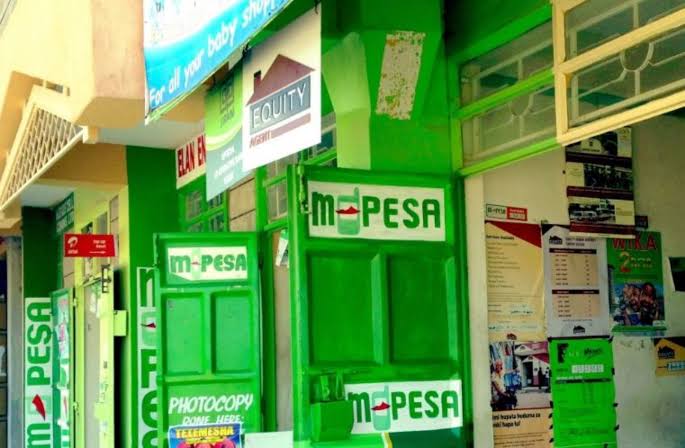
If you run a shop, a salon, a boda stage, or any business that collects most of its money through M-Pesa, you already know the fees are real. What a lot of owners get wrong is treating them as background noise instead of a line item. When you're moving hundreds of small payments a month, a few shillings here and there stops being trivial and starts showing up in your bottom line at the end of the month.
This isn't about avoiding M-Pesa or resenting Safaricom. Mobile money is the reason so many Kenyan businesses can operate without a bank branch nearby, without carrying cash risk, and without turning away customers who don't have coins on them. The point of this article is simpler: understand how the fees actually work, decide deliberately whether you or the customer carries that cost, and build a habit of checking the real number instead of guessing.
Fees are a cost of doing business, not a rounding error
For a business with a high ticket price and low transaction volume — say, a contractor invoicing a handful of clients a month — M-Pesa charges are genuinely a rounding error. Nobody is losing sleep over the fee on a KES 80,000 payment.
But that's not most small businesses. Kiosks, food vendors, salons, water delivery, boda operators, small retailers — these are high-volume, low-ticket businesses. You might process 20, 50, or 200 M-Pesa transactions a day, each one small. If withdrawal or transfer fees are quietly eating into every one of those transactions, and you haven't priced for it, you're subsidizing your customers' convenience out of your own margin without realizing it.
The fix isn't complicated, but it does require you to actually look at the numbers rather than assume they're negligible. That's the theme running through this whole article: stop guessing, start checking.
How the tiered fee structure actually works
Both sending money (M-Pesa to M-Pesa transfers) and cash withdrawals are charged on a tiered, banded structure. Instead of a flat percentage, Safaricom charges a fixed fee per amount bracket — small transactions in the lower brackets (roughly KES 1–100, then 101–500, then 501–1,000, and so on up to the KES 250,000 ceiling) cost a few shillings, and the fee steps up as you move into higher brackets. It isn't a smooth curve — it's a staircase.
This creates something worth paying attention to: break points. Because fees jump at the edge of each bracket rather than scaling continuously, sending KES 505 can cost noticeably more than sending KES 495, even though the amounts are almost identical. If you or your customers are making transfers or withdrawals near the top of a bracket, it's often worth checking whether trimming the amount slightly — or combining it with the next payment instead — lands you in a cheaper bracket.
This matters most for withdrawals and for M-Pesa to M-Pesa transfers specifically. It's a different picture entirely for how customers pay a business, which is the next point.
Why Till and Paybill payments are usually the smarter default
Here's the detail that changes how you should think about collecting payment: paying via a Till number (Buy Goods), a Paybill, or depositing cash into an M-Pesa account is typically free for the person paying. The customer sending you money through Till or Paybill isn't charged a transaction fee for that action, the way they would be if they sent you a direct person-to-person transfer.
That's a meaningful difference at the point of sale. If a customer is hesitating over a purchase and mentally calculating "is this going to cost me extra to pay," directing them to your Till or Paybill number removes that friction entirely — because for them, it genuinely doesn't cost extra. Compare that to asking a customer to "just send it" to your personal number, where they're absorbing a transfer fee just to complete a purchase. That's a small but real reason to walk away, especially for lower-value purchases where the fee is proportionally significant.
If your business is still collecting payments through personal-number transfers rather than a registered Till or Paybill, this is worth fixing on its own — not because it's free for you (it isn't, see below), but because it removes a cost objection your customer is currently carrying that you don't need them to carry.
The cost doesn't disappear — it moves
Businesses that receive money via Till or Paybill are charged separately by Safaricom, on a different fee schedule applied at settlement, not at the moment the customer pays. So the customer's payment feels free to them, but you as the business are still paying something on that same transaction — it's just billed to you rather than deducted from what the customer sends. Safaricom has periodically reduced these business-side transaction costs over time, which is worth watching, since it directly affects your margin on every mobile money sale without you having to change anything else about how you operate.
Should you absorb the fee, or pass it on?
This is the pricing decision most SME owners never make deliberately — they just default to absorbing it and hope it works out. There are really two honest options.
Option one: build it into your price
You quietly factor your average M-Pesa cost into your stated prices, so there's no separate line item and no conversation with the customer about fees. This protects trust and keeps the transaction simple — customers see one number and pay it. The tradeoff is that if you don't actually calculate what the fee is costing you, "building it in" often just means guessing at a slightly higher price and hoping it covers the gap. It frequently doesn't.
Option two: pass it on as a visible surcharge
You charge your base price and add a clearly stated M-Pesa or transaction charge, especially for larger amounts or where you're the one absorbing a withdrawal fee to convert the funds to cash. This protects margin exactly and precisely — you're never short. The tradeoff is customer friction: added line items can feel like nickel-and-diming, particularly if competitors don't do it, and it can cost you sales at the margin.
A practical way to decide
Use your transaction volume and average ticket size as the deciding factors, not instinct:
- High volume, low ticket size (kiosks, food stalls, salons): absorb the fee into your price. A visible surcharge on a KES 50 sale looks petty and costs you more in goodwill than it protects in margin. Build the average cost into your pricing instead.
- Low volume, high ticket size (contractors, wholesalers, service providers on large invoices): a stated surcharge or "bank transfer preferred for large amounts" policy is reasonable and usually accepted, because the fee is a small percentage of a large transaction and customers understand it.
- Somewhere in between: this is where you actually need the numbers below rather than a rule of thumb.
Practical tactics to protect your margin
- Round your prices sensibly. Awkward amounts near a fee bracket edge (like KES 498 or KES 1,001) create friction for change and can tip a transaction into a more expensive bracket for whoever's paying the fee. Rounding to cleaner numbers often avoids this without customers noticing.
- Batch smaller transactions where you can. If you're regularly withdrawing cash in small amounts throughout the day, consolidating into fewer, larger withdrawals can reduce the total fees paid across the week compared to many small ones — check your own numbers to confirm this holds for your bracket sizes.
- Review your collection method. If you're still taking payments via personal transfer instead of Till or Paybill, revisit that. It affects both what your customer pays and how your own settlement fees are structured.
- Don't assume — measure. This is the tactic that actually matters most, and it's covered in detail next.
Model it: fees as a percentage of revenue
The single most useful number you can calculate each month is this:
Total M-Pesa fees paid ÷ Total M-Pesa-collected revenue = fee percentage.
Pull your M-Pesa statement for the month, add up every charge you personally paid — withdrawal fees, transfer fees, any settlement charges on Till/Paybill receipts — and divide by the total revenue that came in through M-Pesa. That single percentage tells you, in real terms, what mobile money collection is costing you. If it's 0.3% of revenue, you can stop worrying about it. If it's closer to 2-3%, that's a real number worth building into your pricing decision above, not an assumption to wave away.
Do this monthly, not once. Your fee percentage will shift as your transaction mix changes — more small transactions, more withdrawals, more direct transfers versus Till payments — and you want to catch that drift before it quietly erodes a quarter's worth of margin.
Revisit this periodically
Safaricom updates its M-Pesa tariffs from time to time, on both the customer side and the business settlement side, and the trend in recent years has generally been toward lower costs for businesses on the transaction side. That's good news, but it also means a pricing strategy built around today's fee table can go stale. Treat your M-Pesa pricing decision the way you'd treat a rent review — not a one-time task, but something you check in on every few months, especially after any Safaricom tariff announcement.
For exact, current figures — because the specific bracket amounts do change — check the Safaricom M-Pesa app or website directly, or run your numbers through our M-Pesa Charges Calculator, which stays updated with the live tariff structure. Use it before you finalize a price, not after a customer already complained about one.
Tagged under
Related Articles

VAT in Kenya for SMEs: Practical Rules You Can Apply This Week
Understand VAT registration, filing cadence, and common mistakes that create penalties for...

NSSF Remittance Best Practices for Growing Kenyan Businesses
Build a repeatable NSSF process that reduces errors and avoids costly compliance gaps.

Cashflow Forecasting Template for 30-60-90 Day Decision Making
A practical model to forecast inflows and outflows before they become urgent problems.